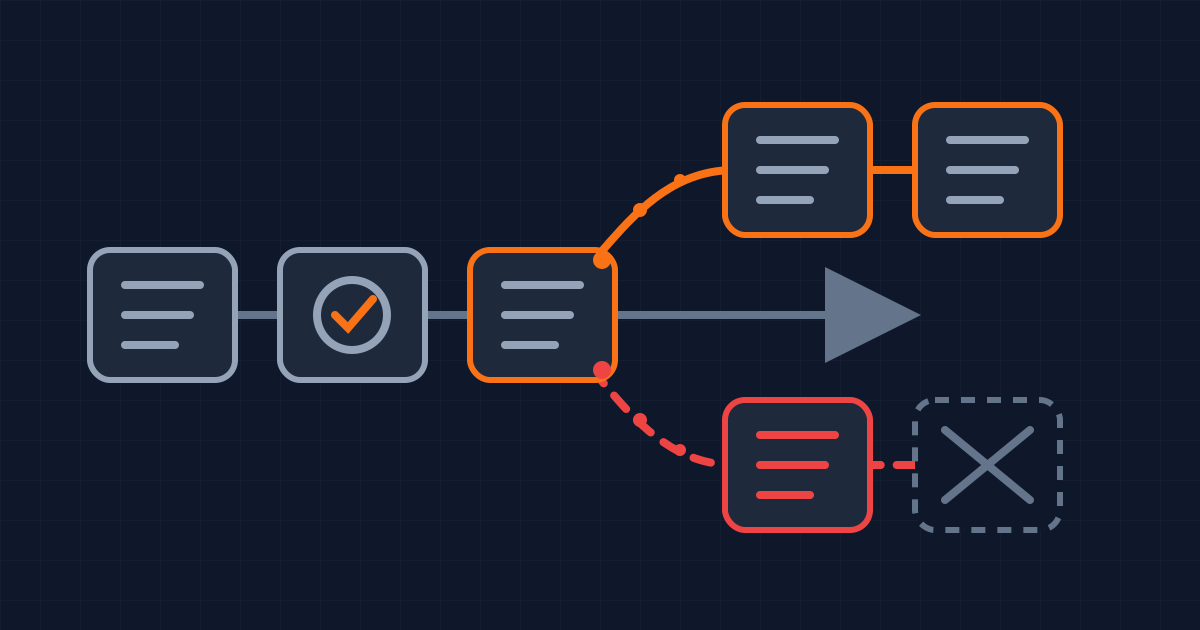
A model change can expose a history mutation
OpenAI released GPT-6.2 Astra and GPT-6.2 Sol on 17 November 2026. The models work with the Responses API and Chat Completions, but tool calling requires Responses. For teams moving an existing agent, the consequential change is not the model name. It is how the API treats conversation history.
Starting with GPT-6.2, the Responses API can remove saved reasoning that follows an edit to an earlier part of the conversation. OpenAI calls that earlier sequence the prefix. Changing an old developer message, rewriting a tool result or inserting content before a reasoning item can produce a prefix_mismatch transformation. The model may repeat work, spend more tokens or answer with less context than the application expected.
That turns conversation serialization into a migration boundary. A test that compares only the final answer can miss it. The response may remain plausible while its reasoning continuity, cache use and latency have changed.
The useful migration question is therefore not only "Does GPT-6.2 answer our evaluation set?" It is "Can our application prove that it preserved the prior sequence it intended to reuse?"
Separate reusable instructions from turn guidance
GPT-6.2 also changes the role of the top-level instructions field. OpenAI's migration guide says those instructions are appended after input for GPT-6.2 models. They are billed at the uncached input rate, even when the earlier prefix receives a cache hit.
Put stable behavior in the first developer message inside input. That is the place for reusable rules such as output standards, tool boundaries and domain constraints. Keep that message byte-for-byte stable across turns when the behavior has not changed.
Use top-level instructions for guidance that belongs only to the current request. A temporary request to produce a shorter answer or prioritize one region should not require rewriting the original developer message. If the durable policy really changes during a conversation, append a new developer message rather than editing the first one.
This separation gives code review a concrete question: is this instruction part of the reusable conversation contract, or is it a turn-scoped override? Mixing the two can create cache misses, unexpected precedence and reasoning removal at the same time.
Append configuration changes instead of rebuilding history
Agent applications often reconstruct every request from their current configuration. That pattern is risky when the configuration changes during a conversation. A new tool, output schema or reasoning level can alter the rendered prefix even if the stored messages appear unchanged.
OpenAI's prefix-preservation guidance recommends append-only alternatives:
- Add a
configuration_updateitem when reasoning effort or a structured-output schema changes. - Add tools with an
additional_toolsitem instead of replacing the original tool list. - Restrict a turn with
tool_choiceandallowed_toolswhile keeping the existing definitions in the same order. - Append a new developer message for an instruction update instead of mutating an earlier one.
Build one canonical event sequence from these items and replay it in order. Do not regenerate previous tool definitions from an unordered map. Do not clean up an old tool result after it has already entered the conversation. If a large file or tool output must be shortened, do it before the first request that includes it.
Deletion of a whole item is not the same as editing a remaining item, but neither should happen invisibly. Record the operation and test the resulting sequence against the model and retention behavior your product depends on.
Compaction needs its own contract
Long conversations eventually need compaction. That operation changes the prefix by design, so it cannot be treated as a transparent storage optimization.
With OpenAI's /responses/compact endpoint, the documented procedure is to omit instructions from the compaction request and pass the returned window into the next request in its original order. Managed context handling can carry configuration updates and developer-added tools forward. With explicit compaction, the application has to restore them.
A home-grown summary is a new piece of context. Put it after the recent history rather than inserting it before reasoning items you hope to preserve, or accept that those reasoning items may be removed. More importantly, test whether the compacted state still contains the authorization, task constraints and tool results needed for the next action.
Compaction should have a version, an input range and an output hash. Those fields make it possible to reproduce why a later turn saw a particular abbreviated history. Without them, a production incident becomes a debate about which summary probably existed.
Make prefix loss visible before rollout
GPT-6.2 responses can report input_transformations, including the reason an earlier reasoning item was removed. The reasoning guide documents prefix_mismatch, end_user_mismatch, model_mismatch, organization_mismatch and turn_boundary as distinct causes.
Log those transformations with the response identifier, workflow version and conversation version. Do not log private prompt contents merely to diagnose them. A useful deployment dashboard tracks:
- The percentage of multi-turn responses with any removed reasoning item.
- The percentage with
prefix_mismatchspecifically. - Cached, cache-write and uncached input tokens per completed workflow.
- Latency and tool-call count before and after the migration.
- Evaluation regressions grouped by transformation reason.
OpenAI's prompt cache diagnostics can compare a request with an earlier response and report the first identified difference on a best-effort basis. Use that during replay testing, then keep the transformation rate as a production signal. A zero cache hit is not proof of reasoning loss, and a cache hit is not proof of answer quality, so measure both mechanisms separately.
Roll out by workflow rather than by account-wide model switch. Start with multi-turn traces that include tool calls, a configuration change, compaction and a retry. Confirm that intended append operations stay append-only and that deliberately edited histories fail in the way your monitoring expects.
Preserve identity and model boundaries
Prefix equality is not the only retention condition. GPT-6.2 can also remove reasoning when the safety_identifier changes, when content crosses an organization or user boundary, or when an application switches model families or downgrades to a less capable model.
Keep the safety identifier consistent for the same end user, or omit it consistently where policy allows. Never reuse reasoning items across tenants. Treat model fallback as a state transition with an explicit policy: either continue without the incompatible reasoning, restart from an approved compacted state, or hand the task back for review.
These controls are safeguards, not inconveniences to work around. A preserved reasoning item carries more than tokens. It may encode work performed under a specific user, model capability and tool policy. The application should know when that context is no longer eligible to travel.
What this changes and what it does not
The release changes the migration checklist for stateful AI applications. Conversation history now needs an append-only contract, stable reusable instructions, explicit configuration events and telemetry for removed reasoning. A model evaluation without request-shape replay is incomplete.
It does not mean reasoning items are durable business state. Store authoritative decisions, approvals and tool effects in your own system. It does not guarantee that an unchanged prefix produces the same answer. Model behavior remains probabilistic, and normal evaluations still matter.
It also does not make every prefix edit a bug. Redaction, tenant separation and policy changes may require discarding prior reasoning. The bug is relying on that reasoning after the application has made it ineligible, while the interface still presents the conversation as continuous.
The narrow operating standard is clear: append instead of rewriting, place reusable and turn-scoped instructions deliberately, observe every transformation and make fallback behavior explicit. That is how a GPT-6.2 migration preserves the work the product actually intended to keep.
Written by Dandelion Labs